

A 72-hour emergency kit sounds like something you buy in a pricey bucket with a label on it. It does not have to be. Official guidance from Ready.gov, FEMA, and the American Red Cross is straightforward: after an emergency, you may need to get by on your own for several days, so keep basic supplies together in a container you can grab quickly.
A three-day kit is a practical starting point, not a complete plan for every disaster. You can build it with items you already own, fill the gaps on sale weeks, and skip specialty gear until the basics are covered. The goal is a kit your household can actually use, not a perfect display stash.
Key takeaways
- Start with a three-day (72-hour) kit, then add more later if you can.
- Water comes first: at least one gallon per person per day for drinking and sanitation.
- Pack non-perishable food your household already eats, plus a manual can opener.
- Use a backpack, duffel, or lidded plastic bin you already have. Fancy packaging is optional.
- Write a date on the kit, check expiration dates, and update it as your household changes.
What a 72-hour kit is for
Ready.gov puts it simply: after an emergency, you may need to survive on your own for several days, and a disaster supplies kit is a collection of basic items your household may need. FEMA names at least 72 hours as a useful planning window. The American Red Cross and the CDC both treat a three-day supply as the starting point for an evacuation kit, and suggest a two-week supply at home if you can manage it. Do not wait for a perfect two-week pantry before you pack a bag you can carry out the door.
Start with water
Water is the item that most often gets underestimated, and it is also one of the easiest to buy without special equipment. Ready.gov and the CDC both recommend storing at least one gallon of water per person per day for drinking and sanitation. For a three-day kit, that means at least 3 gallons for one person, 6 gallons for two people, and 12 gallons for four people.
Ready.gov notes that a normally active person needs about three-quarters of a gallon of fluid a day, but needs rise with heat, activity, and individual circumstances. In very hot temperatures, water needs can double. Children, nursing mothers, people who are sick, and pets may need more, so plan on the higher end in a warm climate.
The most reliable budget option is usually commercially bottled water, stored unopened in a cool, dark place. Ready.gov recommends keeping it in the sealed original container. If you fill your own containers, use food-grade water jugs, not leftover milk or juice bottles. Ready.gov warns that milk protein and fruit sugars are hard to clean out and can encourage bacterial growth, and that glass can break and is heavy. Homemade stored water should be replaced every six months, according to Ready.gov and the CDC, so label the date. If you ever need to treat water of uncertain quality, follow the official steps on Ready.gov’s water page. They list boiling as the safest method: a rolling boil for one full minute, then let it cool.
Food that is cheap, familiar, and does not need a stove
Ready.gov’s food guidance is to stock canned foods, dry mixes, and other staples that do not need refrigeration, cooking, water, or special preparation, and to include a manual can opener and utensils. They also give a rule that saves money: choose foods your family will actually eat, and remember any special dietary needs. You may already have many of these on hand.
Items they suggest include ready-to-eat canned meats, fruits, and vegetables; protein or fruit bars; dry cereal or granola; peanut butter; dried fruit; canned juices; non-perishable pasteurized milk; high-energy foods; food for infants if needed; and a few comfort foods. Commercially canned food can be eaten straight from the can, which matters if the power is out.
A budget-friendly way to fill this list is to shop your own kitchen first. Move a few cans, a jar of peanut butter, a box of granola bars, and a can opener into the kit, then replace those staples on your next grocery trip. After that, add store-brand cans when they are on sale. Keep canned food in a cool, dry place and replace expired items as needed, as Ready.gov recommends.
The core gear, without the boutique markup
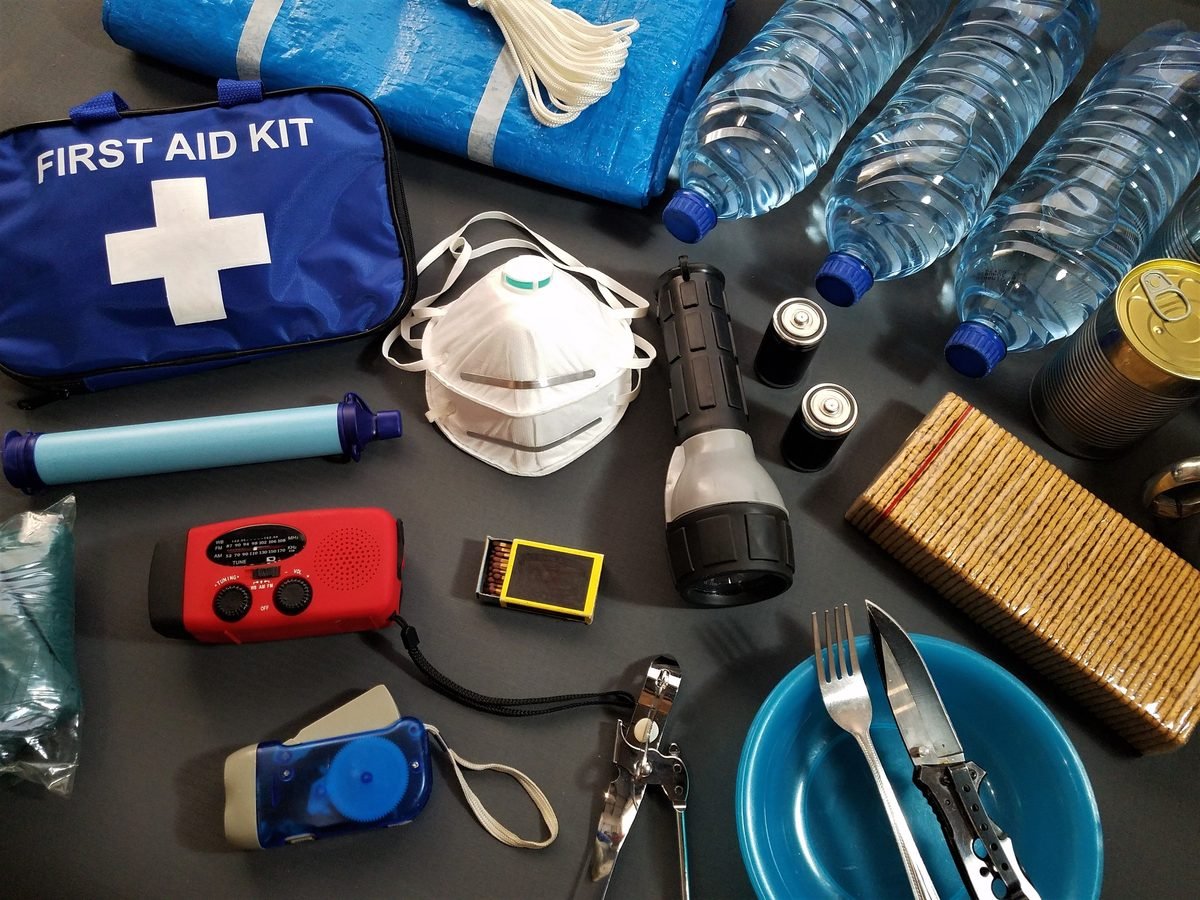
Once water and food are in place, pack the basic items from the Ready.gov checklist. Most are ordinary household tools: a flashlight and extra batteries; a battery-powered or hand-crank radio, ideally one that can receive NOAA Weather Radio alerts; a first aid kit; a whistle; a dust mask; plastic sheeting, scissors, and duct tape for sheltering in place; moist towelettes, garbage bags, and plastic ties for sanitation; a wrench or pliers to turn off utilities if you have been shown how; a manual can opener; local maps; and a cell phone charger plus a backup battery. FEMA notes that most of these items are inexpensive and easy to find. You do not need a matching set. If you already own a multi-purpose tool, the Red Cross includes that on its basic list too.
Then add the things that are specific to your household, which is where a generic pre-bought kit often falls short: copies of important documents in a waterproof pouch, cash, prescription medications and glasses, infant or pet supplies if you need them, a change of clothes and sturdy shoes, a warm blanket for each person, and hygiene items. The Red Cross also recommends a seven-day supply of medications, plus family and emergency contact information. Ready.gov notes that about half of all Americans take a prescription medicine every day, and that an emergency can make refills hard to get. Pack what your household already uses, and talk with a pharmacist or clinician about a small reserve if you need one.
How to build, pack, and maintain the kit on a tight budget
Work in layers so the project does not turn into one expensive shopping trip. First, inventory what you already have. A backpack or lidded plastic bin, plus a flashlight, batteries, a can opener, a phone charger, a blanket, and a few canned meals, may already cover a surprising amount of the list. Next, buy water and a can opener if those are missing. Add food over two or three grocery trips, choosing flavors your household already likes so the food will get rotated instead of forgotten. Fill gear gaps with simple versions: a basic radio, a small first aid kit, a whistle, heavy-duty trash bags, and a roll of duct tape. Finally, put paper copies of key documents in a zip-top bag, and keep a second set in email or on a small USB drive if you use one.
Ready.gov says to store kit items in airtight plastic bags and then place the whole kit in one or two easy-to-carry containers. That can be a plastic bin for a home kit, and a backpack if you may need to leave quickly. You do not have to buy both on day one. Make sure every household member knows where the kit is kept. If you later make smaller kits, Ready.gov suggests a work kit that can cover at least 24 hours and a car kit in case you are stranded. Set a reminder once or twice a year to check dates, test the flashlight and radio, and update clothes, documents, and prescriptions as your household changes.
FAQ
How much water does a family of four need for 72 hours?
Using the official baseline of one gallon per person per day, a family of four needs at least 12 gallons for three days. Add more for pets, very hot weather, or household members who may need extra water.
Can I store water in old milk jugs?
It is better not to. Ready.gov recommends food-grade water containers, or two-liter plastic soft-drink bottles if you are improvising. They advise against jugs or cartons that held milk or juice, because residues are difficult to remove, and against glass, which can break.
Do I need a commercial “survival kit”?
No. A commercial kit can be convenient, but it is not required. Ready.gov and the Red Cross publish item lists you can fill from a grocery store, pharmacy, and hardware aisle, often with things you already own.
How often should I replace the food and water?
Follow the dates on commercially bottled water and packaged food, and keep the kit in a cool, dark, dry place. If you filled your own water containers, Ready.gov and the CDC say to replace that water every six months. Check the kit at least once a year, or sooner if your household changes.
Photo: Karolina Grabowska on Pexels