


Those needle-sharp puppy teeth can turn a play session into a painful one very quickly. Mouthing and nipping are still normal. Puppies use their mouths to explore, play with littermates, and learn how much pressure is too much.
Your job is not to scare the play out of your puppy. It is to teach two lessons: be gentle with human skin, and then keep those teeth on toys instead of hands, ankles, and sleeves. The steps below follow guidance from the ASPCA and the American Kennel Club (AKC). Stay consistent, stay calm, and get help from a qualified professional if the behavior does not improve or if it looks fearful or aggressive rather than playful.
Key takeaways
- Play biting is normal in puppies and does not mean your dog is vicious.
- First teach bite inhibition: a hard bite ends the game for a short time.
- Then teach that teeth do not belong on skin, and redirect to a toy.
- Do not jerk away, roughhouse with your hands, yell, or use physical punishment.
- If nipping has not eased by around 6 months, or if bites seem fearful or stiff, call a qualified professional.
Why puppies bite during play
The ASPCA explains that puppies spend a great deal of time playing, chewing, and investigating objects, and all of those activities involve the mouth. When they play with people, they often chew on hands, arms, and clothing. That can look cute at seven weeks and much less cute at three or four months, when the puppy is bigger and the teeth still feel like pins.
Puppies usually start learning bite inhibition with other dogs. Bite inhibition is a dog’s ability to control the force of the mouth. A bite that is too hard often gets a yelp, play stops for a moment, and over time the puppies learn that gentler mouths keep the fun going. People can teach a similar lesson: gentle play continues, and painful play stops. The AKC also notes that this kind of mouthing is a normal part of puppy teething and development. As Dr. Jerry Klein, Chief Veterinarian for the AKC, puts it: “Play biting does not mean your puppy is vicious.”
Step 1: Teach a gentler mouth
The ASPCA’s first goal is not “never use your mouth.” It is “people have sensitive skin, so be very gentle.” Their process looks like this:
- Let your puppy mouth your hands during play.
- When a bite is especially hard, give a high-pitched yelp, as if you are hurt, and let your hand go limp.
- That startle often makes the puppy pause. Praise a stop or a lick, then resume play.
- If the puppy bites hard again, yelp again. Repeat this no more than three times in a 15-minute period.
If yelping does nothing, the ASPCA says you can use a short, firm phrase such as “Too bad!” instead. The AKC adds an important caveat: for some puppies, a high-pitched “ow!” actually winds them up. If that happens, skip the sound. Turn away quietly, walk away, or give the puppy a brief, calm chance to settle.
When yelping is not enough, switch to a time-out. The ASPCA suggests yelping at a hard bite, then ignoring the puppy for 10 to 20 seconds, or getting up and moving away for 10 to 20 seconds if the mouthing continues. After that short pause, come back and invite play again. As the hardest bites fade, tighten the rule and pause for lighter bites until you feel little or no pressure at all.
Step 2: Keep teeth off human skin
Once your puppy can mouth more softly, raise the bar. The ASPCA recommends a time-out every time teeth touch skin, not only when a bite hurts. The instant you feel teeth, yelp, walk away, and ignore the puppy for 30 to 60 seconds. If the puppy follows and keeps nipping, leave the room for 30 to 60 seconds, but only if the space you leave behind is already puppy-proofed.
The AKC frames the same idea as “game over,” with no exceptions. Yelling can accidentally reward the bite, because it still gives the puppy a big reaction. Dog trainer Kathy Santo, writing for the AKC, suggests turning around and tucking your hands into your armpits. “It’s actually a calming signal and a minor form of attention withdrawal,” she says. She also warns: “Be careful not to roughhouse with your young pup in ways that only encourage them to lose control and bite you.”
Keep a chew toy or tug toy within reach so you can swap it in before your sleeve becomes the toy. The ASPCA and AKC both recommend this substitution as soon as the puppy goes for fingers or toes. If the nipping continues after you offer a toy, end the play session. Choose games that do not involve your skin, such as fetch or tug-of-war, instead of wrestling and slappy hand play. If your puppy ambushes your feet and ankles, the ASPCA says to freeze, present a tug toy, and only start walking again when the puppy grabs the toy. If the puppy mouths you during petting, feed small treats from your other hand so touch stays gentle.
Check the basics, and skip the harsh corrections
Not every flurry of nipping is a training failure. The AKC points out that a biting puppy may be overtired and need a quiet rest, or may need a potty break, a meal, or a drink. If you have already offered a toy several times, the puppy may simply need to burn off energy with a short, supervised run or a game of fetch. If you use a crate for a calm-down break, keep it low-key so the puppy does not associate the crate with punishment, and let them out once they have settled. When you catch your puppy being calm, praise that, too.
The ASPCA also lists habits that make play biting worse. Do not wave your fingers or toes in the puppy’s face to invite play, and do not jerk your hands or feet away; a sudden pull can turn the game into “chase the moving target,” so let the hand or foot go limp instead. Do not slap, hit, scruff-shake, tap the nose, or stick fingers into the puppy’s mouth. Physical punishment can lead to harder play and can also make a puppy afraid of you. The goal is gentle play, not no play.
When mouthing is not just play
Most puppy mouthing is ordinary. Some biting, though, comes from fear or frustration. The ASPCA describes “temper tantrums” that can show up when a puppy is held still, handled in a way they dislike, or gets overexcited in play. A playful puppy usually looks relaxed. A tantrum can look stiff or frozen, with lips pulled back, growling, and bites that hurt much more than normal play mouthing.
If that happens while you are holding the puppy, the ASPCA says not to yelp, because the sound may intensify the behavior. Stay calm, avoid hurting the puppy, and then get qualified help. Repeated frustration biting is not something to wait out. For possible fear or aggression, the ASPCA recommends a Certified Applied Animal Behaviorist (CAAB or ACAAB) or a veterinary behaviorist (Dip ACVB). If you cannot find one, a Certified Professional Dog Trainer (CPDT) can help, provided they have real experience with fear and aggression. For ordinary mouthing, a well-run puppy class is often enough. Dr. Klein’s checkpoint is useful: if the behavior is not more manageable by 6 months, consult an experienced trainer or behavior specialist.
FAQ
How long does it take to stop play biting?
There is no single timeline that fits every puppy. The AKC notes that a puppy may back off in one session and come back teeth-first in the next. Consistency matters more than a dramatic correction. If the biting is not more manageable by around 6 months, get professional help.
Should I let my puppy chew on my hands at all?
The ASPCA method starts by allowing some mouthing so you can teach a softer bite, then gradually changes the rule to “no teeth on skin.” If you prefer to skip hand play from day one, still end the game and redirect to a toy whenever teeth touch you.
What if a yelp makes my puppy bite more?
Then stop yelping. The AKC says a high-pitched “ow!” winds some puppies up. Switch to a quiet withdrawal: still hands, a turned back, a short time-out, and a toy when you resume. The consequence should be boring, not exciting.
When should I call a trainer?
Call sooner if the bites seem fearful, stiff, or much more painful than ordinary play, or if tantrums keep happening when you handle the puppy. For stubborn but typical play mouthing, start with a well-run puppy class.
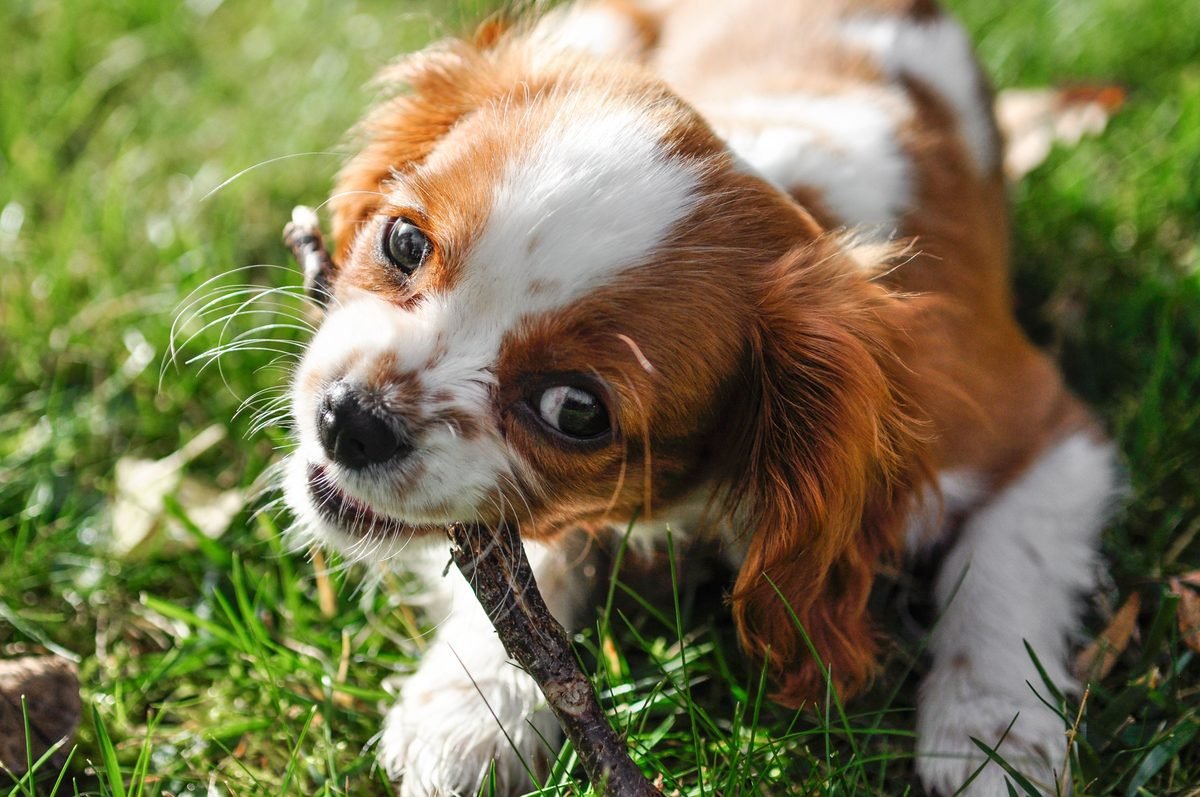
Photo: Aleksandra Nowicka on Pexels