
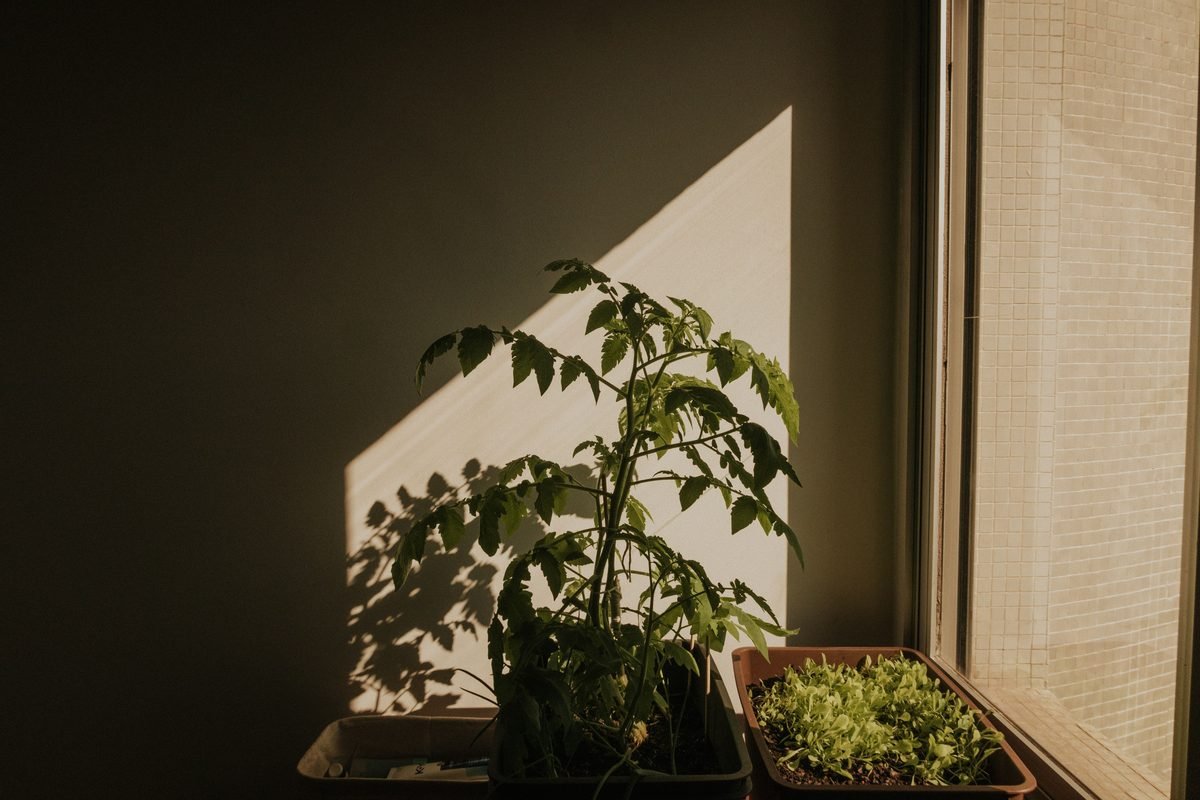
You do not need a backyard or a truckload of soil to grow some of your own food. A few pots on a balcony, stoop, or sunny driveway can produce salad greens, herbs, and even tomatoes if you match the crop to the container and the light you actually have.
Container gardening is one of the gentlest ways to start. The pots are small enough to manage, and you can move them if a corner turns out to be too shady. The advice below comes from university extension services, including the University of Maryland Extension, Iowa State University Extension, and North Carolina Cooperative Extension. Start with easy crops, give them enough room, and water more often than you would in a garden bed.
Key takeaways
- Begin with easy crops: leaf lettuce, radishes, herbs, bush beans, chard, peppers, and cherry tomatoes.
- Match pot size to the plant. A pot that is too small will stall growth.
- Use a potting mix, not soil dug from the yard, and choose containers with drainage holes.
- Warm-season crops such as tomatoes and peppers need about 6 to 8 hours of direct sun. Leafy greens can manage with less.
- Containers dry out fast. In hot weather, you may need to water every day.
Choose beginner-friendly crops
Maryland Extension lists popular container vegetables as salad greens, peppers, eggplant, tomatoes, beans, chard, beets, radishes, squash, and cucumbers, along with many herbs. They also flag more challenging crops, including melons, corn, potatoes, and sweet potatoes. For a first season, skip those and pick plants that give you a harvest without taking over the patio.
Leaf lettuce is among the most forgiving options. Maryland Extension lists a minimum volume of only half a gallon, and North Carolina Extension suggests a wide, shallow container 6 to 8 inches deep or a 5-gallon window box. Radishes are even faster and, according to Maryland’s chart, need only about a pint of space. Herbs such as basil, cilantro, thyme, parsley, chives, and mint generally do well in 2- to 5-gallon pots; keep mint in its own container, because it spreads. Bush beans and Swiss chard have a modest 2-gallon minimum and do not need a trellis.
Cherry tomatoes and peppers are the crops most beginners want. Maryland Extension lists a 2-gallon minimum for cherry tomatoes and 5 gallons for standard tomatoes and peppers. North Carolina Extension recommends a 5-gallon minimum for tomatoes and at least 3 gallons for peppers, and notes that cherry and smaller-fruited tomatoes are easier than large slicing types. When in doubt, go bigger: a 5-gallon pot is a comfortable size for one tomato or pepper plant. Look for words such as bush, dwarf, patio, compact, or determinate on the label, and give tomatoes and peppers a cage or stake.
Give each plant the right pot, and the right mix
The most common beginner mistake is squeezing a big plant into a cute, undersized pot. Maryland Extension is direct about this: if you restrict root growth too much, the plant will not grow well. Besides the crop sizes above, their chart also lists 2 gallons for carrots, 5 gallons for eggplant or cucumbers, and 10 gallons for summer squash.
The container itself can be ordinary. Food-safe buckets, fabric grow bags, window boxes, and sturdy plastic pots all work if they drain. University of Illinois Extension says to choose a container with drainage holes in the bottom, and that several holes are better than one. Raise pots slightly so water can actually escape, and skip the old advice about putting rocks in the bottom. Maryland Extension says that layer does not improve drainage and can leave the mix waterlogged. Also think about weight: Maryland Extension notes that a 20-inch-diameter container filled with moist potting mix and plants can weigh 100 pounds.
The other beginner shortcut that backfires is filling pots with soil from the yard. Iowa State University Extension says garden soil alone is not a good growing medium in a pot: it compacts, drains poorly, and can pull away from the sides of the container as it dries. Maryland Extension adds that garden soils can drown roots, especially in shallow containers. A commercial soilless potting mix is the easier choice. Quality mixes are lightweight, well-drained, and generally free of weeds and diseases. Fill the container, leave a little space at the top for watering, and moisten the mix until it is evenly damp, not soggy.
Match the plant to your sunlight
Before you buy a tomato, watch the spot for a day. Maryland Extension says warm-season crops such as tomato, pepper, eggplant, and squash need 6 to 8 hours of direct sun, while cool-season crops such as lettuce, spinach, and Asian greens can grow with 3 to 5 hours. If your balcony is only partly sunny, you can still grow a lot of lettuce, spinach, kale, chard, basil, and cilantro. Save the tomatoes and peppers for the brightest corner, or for a pot you can slide into better light.
Plant, water, feed, and harvest
You can start with seeds or with nursery transplants. Seeds work especially well for lettuce, radishes, beans, and many herbs. Transplants are the easier route for tomatoes and peppers. Follow the spacing and depth on the seed packet, loosen circling roots on a transplant before you set it in, and give tomatoes and taller peppers a stake or cage at planting time. University of Maine Extension also suggests keeping plants at least an inch away from the hot side wall of the container, then filling in mix to about an inch below the rim.
Water is the daily habit that makes or breaks a container garden. Pots dry out faster than garden soil because the root zone is small and exposed to air on all sides. Maine Extension notes that you may have to water daily. University of Florida IFAS recommends watering until moisture seeps from the drainage holes, then watering again once the mix feels dry to about the top knuckle of a finger. Illinois Extension says to check containers daily and notes that potting mix in clay, fabric, and unglazed ceramic dries faster than mix in plastic or glazed pots. Empty saucers so roots do not sit in standing water.
For fertilizer, follow the product label and do not guess with extra scoops. Maryland Extension says long-season crops such as tomatoes, cucumbers, eggplant, and peppers may need a light feeding every two weeks, and they suggest looking for a fertilizer with a roughly 3-1-2 ratio of nitrogen, phosphorus, and potassium.
Harvest often so the plants keep going. North Carolina Extension recommends taking the outermost lettuce leaves and removing up to one-third of the leaves at a time, or cutting the plant back to about an inch above the soil once it is 4 to 6 inches tall, without damaging the center growing point. Pull radishes while they are still small and tender, and pick beans, peppers, and cherry tomatoes as they ripen.
A simple first-season plan
If you want a weekend setup that is easy to maintain, start with four containers: a wide, shallow pot of leaf lettuce; a 2- to 5-gallon pot of herbs, with mint on its own; a 5-gallon pot with a compact, staked tomato; and a 5-gallon pot with a pepper, or a 2-gallon pot of bush beans if your sun is only moderate. Place the tomato and pepper in the sunniest spot and keep the lettuce where it gets a little afternoon shade in midsummer. That small collection is enough to learn how pots dry out and which corner of your space actually gets six hours of sun.
FAQ
Can I fill pots with soil from my yard?
It is better to use a potting mix. Iowa State University Extension and Maryland Extension both advise against using garden soil alone in containers, because it compacts and can leave roots short of air. A bagged soilless potting mix is the straightforward choice for beginners.
What if my balcony only gets a few hours of sun?
Grow greens and some herbs first. Maryland Extension says lettuce, spinach, and similar cool-season crops can work with 3 to 5 hours of direct sun. Tomatoes, peppers, eggplant, and squash want 6 to 8 hours.
How often should I water?
Check every day, especially in warm, windy, or hot weather. Containers dry out faster than in-ground beds and may need daily watering. Water thoroughly until water runs out of the drainage holes, and do not let saucers stay full. Smaller pots and clay or fabric pots dry out faster than large plastic ones.
What should I plant if I can only start with one or two pots?
If you want quick harvests, start with leaf lettuce and an herb pot. If you want a single showpiece crop and you have a sunny spot, start with one cherry tomato in a 5-gallon container.
Photo: Letícia Alvares on Pexels